How to Scent a Large Open-Plan Living Room (Scentscaping)
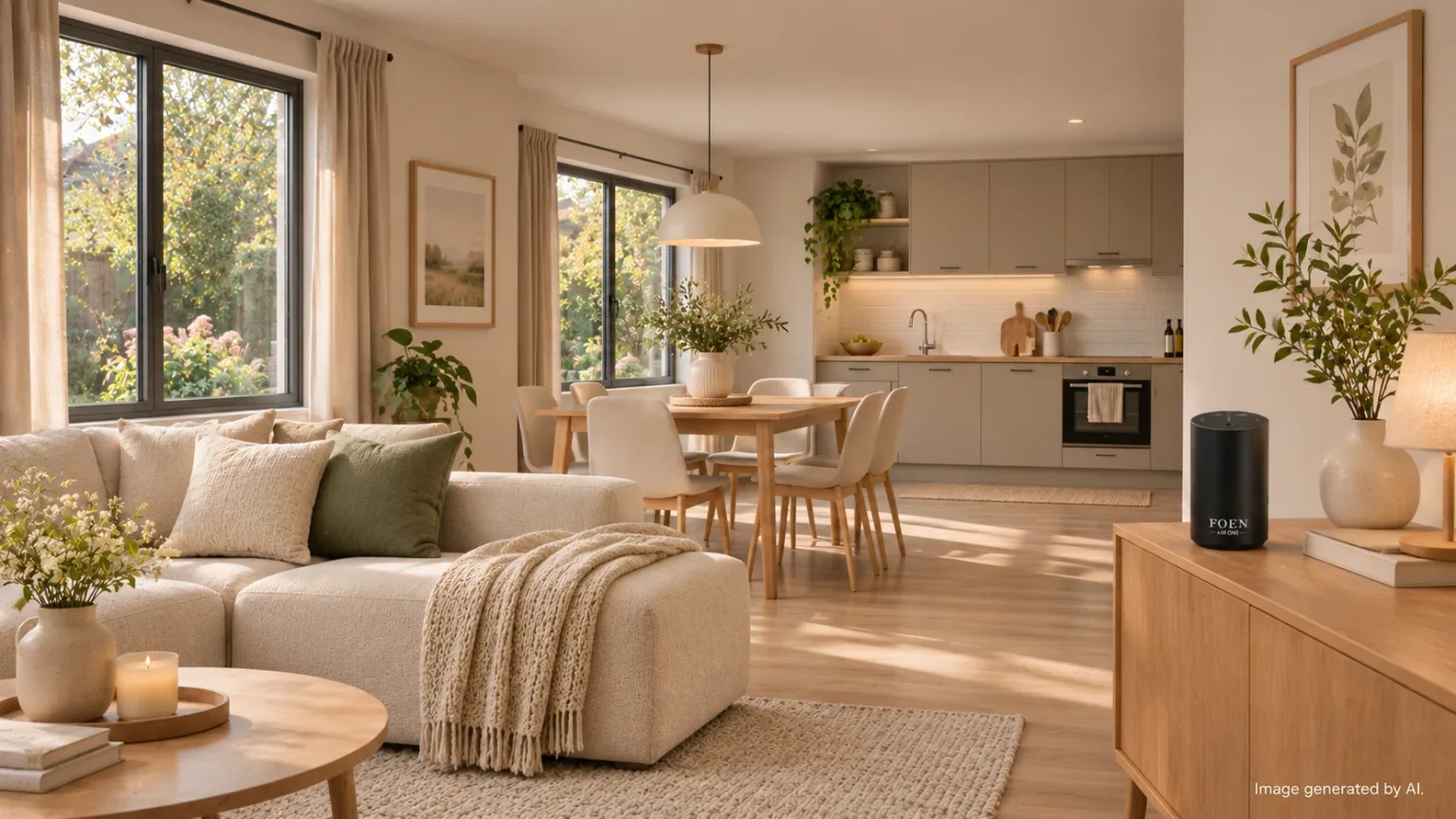
If your living room opens into the kitchen or dining area, you are not scenting one room - you are scenting a connected system. Air movement dilutes the fragrance, kitchen odours mix in, and tall ceilings can make the effect feel inconsistent from one side of the space to the other.
This guide shows a better approach than simply “adding more”. It is about scentscaping - creating one cohesive fragrance experience across zones, so it feels inviting as you move from lounge to dining to the kitchen-adjacent area.
The realities of open-plan scent
Open-plan layouts can make even a beautiful fragrance feel “wrong” in practice. Usually it is not the scent itself - it is how far it has to travel, what it meets on the way, and where people actually sit or walk.
Why “more fragrance” often backfires
In a large connected space, extra output can create a strong, obvious plume near the device while leaving distant areas flat. Meanwhile, cooking odours can arrive sooner than your chosen notes, so the overall impression changes from one moment to the next.
Quick reality check: if it smells strongest right where you stand next to the diffuser, but weaker elsewhere - the problem is distribution and balance, not your taste.
What scentscaping means
Scentscaping is treating fragrance like interior design. Instead of trying to flood an entire open-plan space with one heavy perfume-like cloud, you build a controlled experience - one fragrance direction supported by the right placement and textile anchoring.
Think of it like this: you keep the main “story” consistent, then let each connected zone read it slightly differently - warmer where textiles catch it, lighter where airflow thins it out.
One simple anchor idea
Pick one primary fragrance direction (for example, warm woody, sweet powdery, or deep oriental) and avoid switching to competing notes across the lounge, dining, and kitchen-adjacent areas. That is how you reduce the “sometimes nice, sometimes odd” feeling.
| Approach | What you feel | Best for | Common limitation |
|---|---|---|---|
| More output of the same scent | Strong near the source, fading far away | Small rooms with minimal airflow | Can overwhelm sensitive noses and kitchen mixing |
| Scentscaping (one direction, balanced placement) | Consistent, “put together” experience across zones | Large open-plan spaces | Requires testing from several positions |
| Textile anchoring + air distribution | Cozy diffusion that lingers and feels integrated | Curtains, rugs, upholstered sofas | Needs careful, light application (spot test first) |
Practical insights
- If your open-plan area includes an open kitchen, plan for mixing - not avoidance. The goal is not to stop food smells entirely, but to keep them from hijacking your fragrance direction.
- Choose your “main occupied zones” first. If you scent mainly for the room corner where you rarely sit, you will likely misjudge how the fragrance actually performs day-to-day.
A simple process for large spaces
Use this straightforward workflow to get a balanced result without constantly guessing.
- Remove unwanted odour sources
Start with the basics: empty bins, check for lingering smells from cooking, and address any textiles that hold odours. Scentscaping works best once the “background noise” is under control. - Identify the main occupied zones
Mark where people spend time: sofa seating, dining chairs, and the kitchen-adjacent area where you actually notice the air. - Choose one fragrance direction
Pick one profile family for the whole open-plan area. Consistency is what makes it feel premium. - Select an appropriate scenting product (and intensity)
For large, connected spaces, you usually need controllable diffusion rather than relying on a single fixed-point scent. - Assess from several positions
Walk the space. Check how it feels from the sofa, the dining table, and the kitchen edge. If the result changes dramatically depending on where you stand, adjust placement or intensity.
Give yourself a short evaluation window. Scent perception stabilises after repeat exposure; re-check after a couple of sessions rather than judging immediately after switching on.
How layout and airflow change perceived scent
In a large open-plan living space, the same product can feel different across distances and corners. Here are the main factors to pay attention to.
Ceiling height and room volume
Higher ceilings increase dilution. The fragrance can be “there” but hard to notice, especially if you are used to stronger effects in lower rooms. That is why intensity control matters.
Ventilation and air currents
Mechanical ventilation, extractor fans, and natural drafts can push your scent away from seating areas or carry kitchen odours into the lounge. If you run the extractor while cooking, reassess after - the kitchen airflow may change the balance.
Open doors and open sight lines
Open doors widen the scent path. That can be good for consistency, but it can also spread your fragrance into areas where you did not intend it to go. Plan your “scent footprint” based on what is open during the day and evening.
Distance from the source
The farther you are, the more the fragrance blends with ambient smells. If you want the space to feel cosy rather than strongly perfumed, aim for a presence that remains pleasant when you are not standing right next to the device.
Quick placement checks
- Choose a more central, open sight line so the device has a clearer path across zones.
- Avoid tall obstructions that break distribution.
- Think about kitchen proximity - keep intensity balanced so the overall mix stays coherent.
Practical insight: if your first placement is behind furniture or near a wall, distribution can become patchy. In open-plan rooms, “invisible placement” is usually better than hidden placement.
Cold-air nebulisation for control
For large open-plan spaces, diffusion technology is often the difference between uneven scent and a balanced experience. Cold-air nebulisation systems disperse fragrance without relying on water or heat - which can make it easier to keep the scent presence consistent as air moves through the home.
Why control matters for wellness-conscious homes
When you share a living space with children, pets, or scent-sensitive family members, you want the ability to dial the effect down. In practice, that means using adjustable intensity and timers instead of leaving the device at a strong setting all day.
What to look for in a large-room setup
- Intensity settings so you can match your day: calm evenings vs. busy cooking times.
- Run-time control so fragrance is present when people are likely to notice it.
- Balanced distribution so you do not depend on a near-source plume.
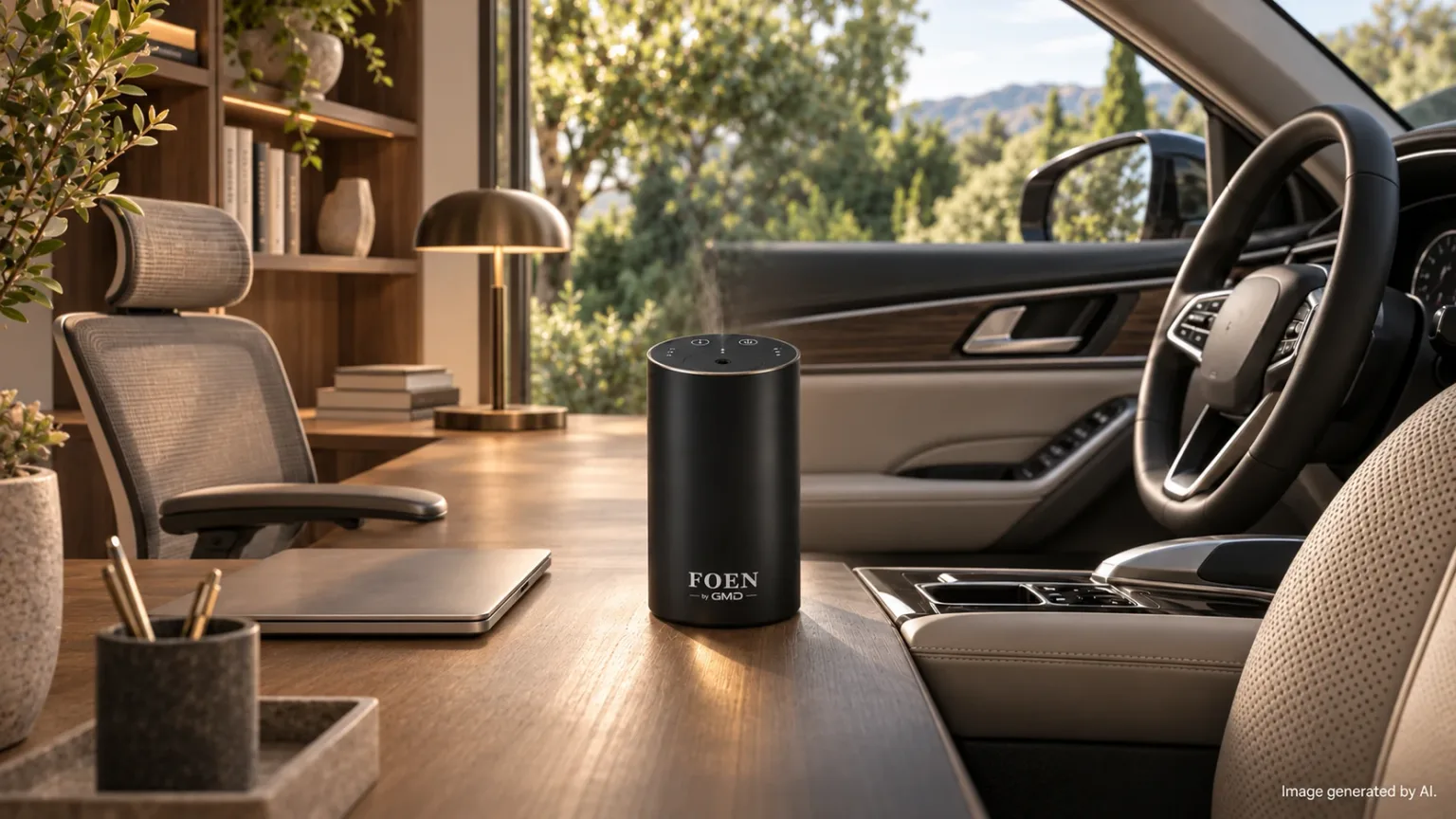
FOEN applies that precision approach to home scenting, building on its heritage in luxury automotive fragrance and adapting the same thinking to living spaces and wellness routines. The focus stays on controllability, consistent release, and a premium feel - not vague “one size fits all” promises.
If you are choosing a system specifically for open-plan homes, consider the FOEN AIR ONE as a cold-air nebulisation option designed to use fragrance micro-particles rather than water vapour. Its adjustable intensity and timed operation can help you keep the overall impression balanced across connected zones.
Layering with textiles for cozy zones
Air diffusion gives you the initial “first impression”. Textiles give you the cosy, lived-in feeling - because fabrics tend to hold scent impressions longer than hard surfaces.
Where textiles help most in open-plan rooms
- Curtains: a light application helps frame the seating area and makes the lounge feel more “settled”.
- Rugs: especially useful if you use a rug to visually define the living zone inside the open plan.
- Upholstered sofas: misting lightly can make the scent feel personal rather than distant.
- Carpets: supports continuity as you move between dining and living areas.
Safety and practicality: always test on a small, hidden area first and keep applications light. For fabric, you want ambience, not saturation.
How to keep the lounge and dining experience consistent
Use the same primary fragrance direction across zones. Then adjust intensity rather than switching notes. For example, if your main direction is warm and woody, support it in the lounge with air diffusion and softly reinforce it in the dining area with a light textile layer. That way, kitchen smells do not feel like they are competing with a different fragrance story.
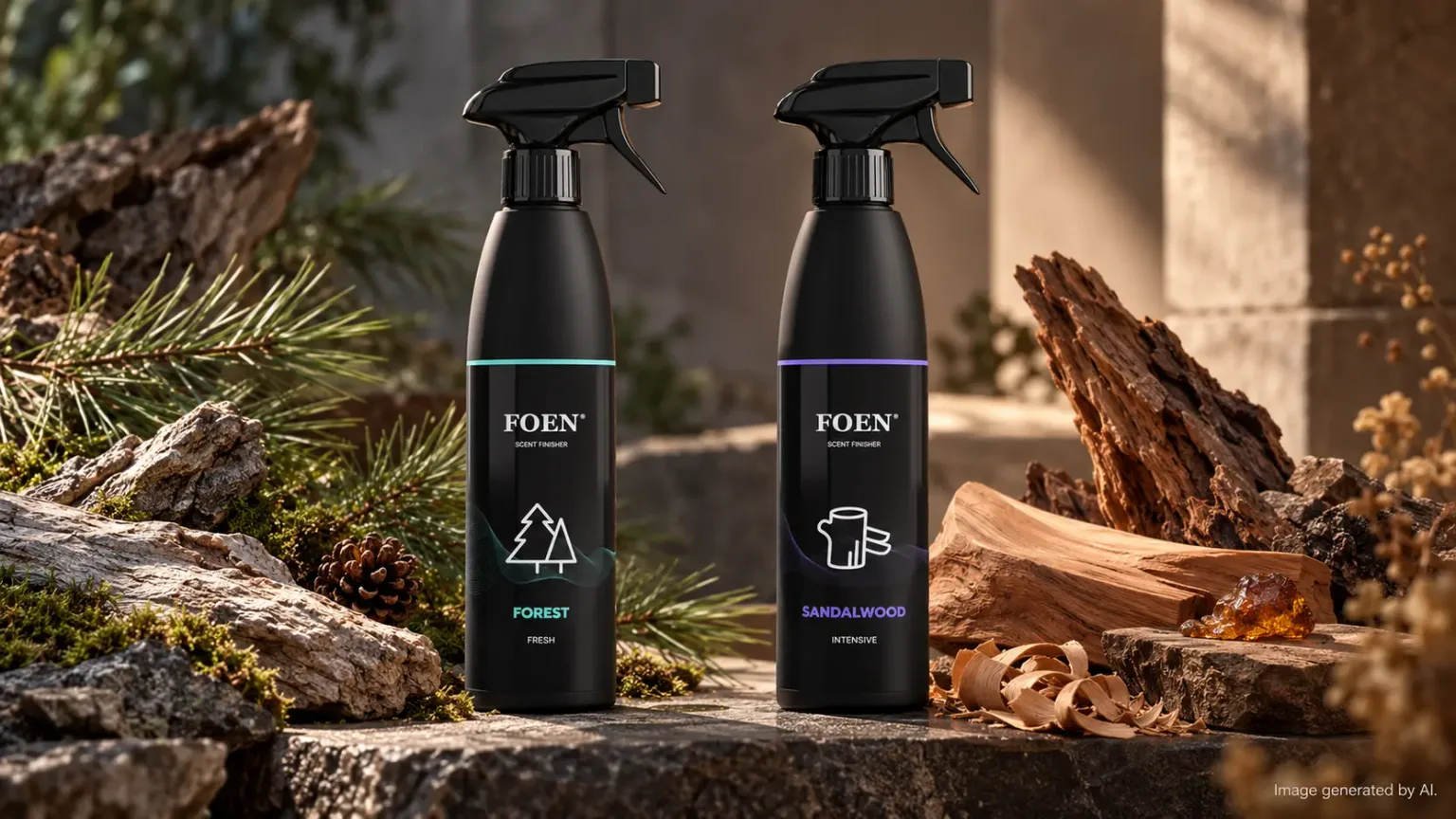
FOEN also offers interior perfume sprays in different sizes - a practical way to anchor the fragrance on textiles when you want the open-plan space to feel more cosy and integrated.
Troubleshooting table
Use this quick guide when results feel uneven, especially in large connected spaces.
| What you notice | Likely cause | Try this first | When it may need more than a portable product |
|---|---|---|---|
| Strong near the source, weak elsewhere | Patchy distribution or placement behind obstructions | Move to a more central, open sight line and increase intensity gradually (not in one big jump) | If distant zones never reach a pleasant presence, you may need a system better suited to large-room diffusion |
| Competing cooking smells (e.g., garlic/steam mixing with your fragrance) | Kitchen airflow carries odours into the lounge before your fragrance stabilises | Run your scent cycle at a time when cooking odours are lower, and keep one fragrance direction (avoid switching notes) | If kitchen odours consistently dominate even at low intensity, focus first on odour sources and kitchen extraction timing |
| Scent spreading into unwanted areas (hallway/adjacent rooms) | Open doors and widened scent paths | Reduce intensity, shorten run-time, and consider whether you want scent only in the main occupied zones | If you cannot contain the footprint with settings and timing, a different placement strategy or a more zone-focused approach may be needed |
| Fragrance feels “off” after some hours | Textiles and air mix over time; some notes read differently as the room conditions change | Re-check from multiple positions and keep the fragrance direction consistent across zones | If the scent never feels cohesive throughout the day, reassess the chosen direction and textile anchoring approach |
When a portable product may be insufficient: if your open-plan layout is very large, highly ventilated, or has strong kitchen airflow, a small, near-fixed scent source can remain localised. In that case, you may need a more controllable diffusion approach designed for larger spaces - especially if you want consistency for both lounge and dining zones.
FAQ
Where is the best place to put a diffuser in an open-plan room?
Start near a more central, open sight line so it can “see” multiple zones. Avoid placing it behind tall furniture that blocks distribution, and check results from the sofa, dining table, and kitchen edge.
How do I stop kitchen smells from ruining my home fragrance?
Reduce unwanted odour sources first, keep one fragrance direction across connected areas, and use timed cycles (and intensity control) so your scent is balanced when cooking odours are lower.
Can I use scenting around pets and children?
In shared homes, favour controllable intensity and run-time. Use low settings, time it for when rooms are occupied, and avoid leaving scent on at a strong level continuously. If anyone is scent-sensitive, prioritise lighter, shorter cycles.
Why does my fragrance smell stronger close to the device?
Distance and airflow dilute scent. If the near-source plume is obvious and distant zones feel weak, adjust placement and gradually change intensity rather than increasing output all at once.
Do I need different scents for lounge and dining?
Usually no. For a premium open-plan feel, keep one primary direction across zones and adjust intensity rather than switching to competing notes. Next step: If you want a more consistent, controllable approach for large open-plan spaces, explore how FOEN AIR works - then match the fragrance direction to your home’s mood and review the result from multiple positions. Discover FOEN home and wellness fragrance solutions