How to Test Car Fragrances Before Buying a Full-Size Bottle
If you have ever hung a “safe” air freshener from the rearview mirror only to find it turns harsh, plasticky, or too strong a few days later, you already know the real problem: a fragrance can smell amazing outside your car and completely different once it settles inside your cabin.
You do not need a lucky guess. You need a structured in-car trial - short, repeatable, and designed to prevent one scent from contaminating the next.
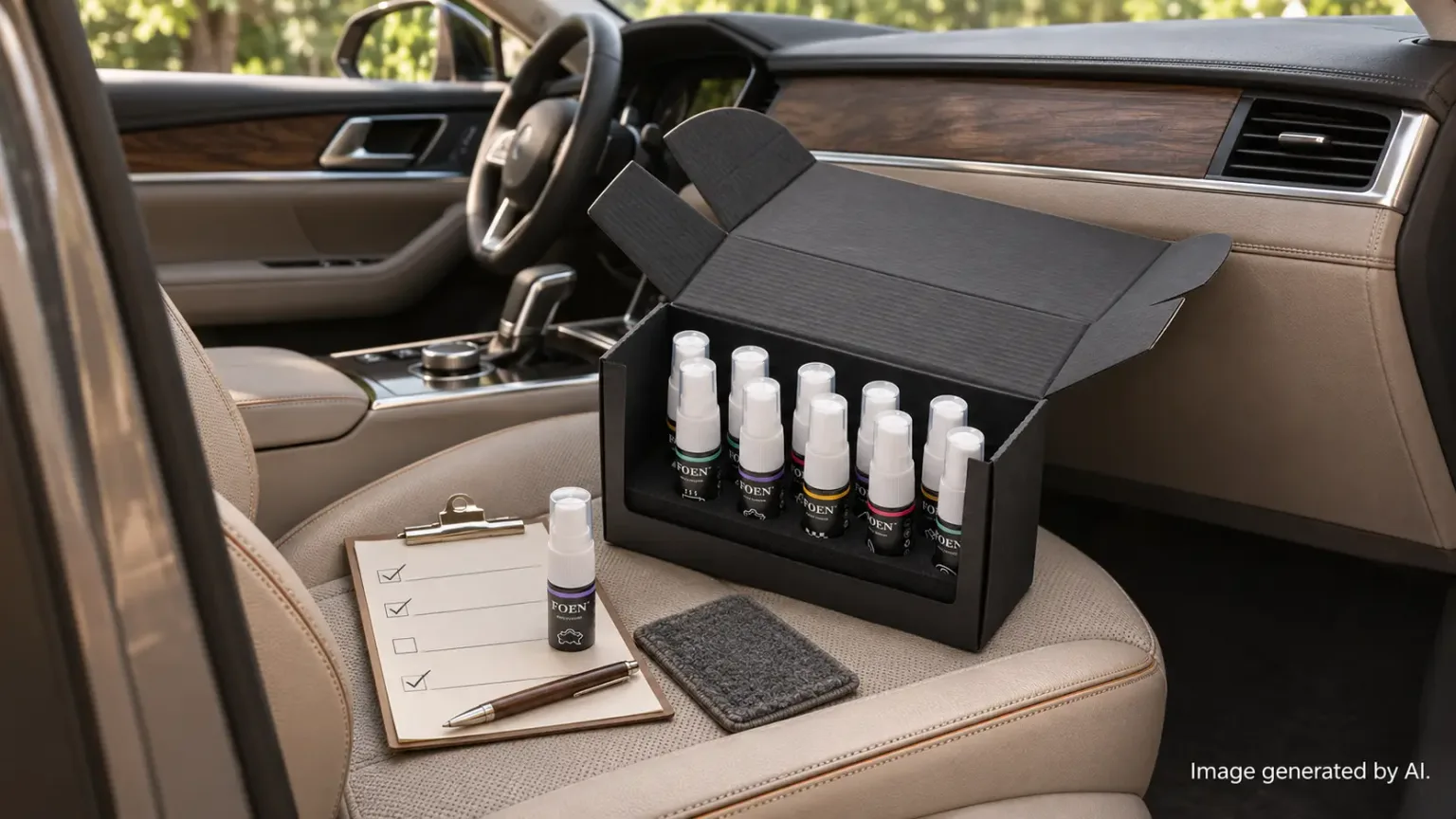
That’s exactly why a car fragrance sample set is the smart starting point: it lets you compare scents the way you will actually experience them during normal driving.
Why car fragrances feel different in a closed cabin
Your car is not a store shelf. It is a small, changing environment where temperature, airflow, and materials affect what you perceive - especially after the first minutes.
Here are the big drivers of “why it smells wrong in my car” moments:
- Heat during parking: sun on the dashboard and seatbacks can bring certain notes forward faster.
- Ventilation on the road: AC cool air can make a scent feel sharper, while warmer airflow can soften it - or make it heavier.
- Fabric vs hard surfaces: fabrics can hold aroma impressions and release them gradually, while smooth plastics often feel more immediate and abrupt.
So the key is not only “Does it smell good?” It’s “How does it evolve while you drive, then sit, then drive again?”
| Testing factor | What changes | What you should do |
|---|---|---|
| Temperature | Notes can show up sooner or feel warmer | Test on a consistent day or at least note whether you are parked in sun |
| Airflow (AC/heater) | Intensity can spike when vents are blowing | Compare with the same airflow settings when possible |
| Materials | Fabrics “stretch” the scent over time | Apply to the same type of surface each time |
| Timing | First impression differs from later dry-down | Judge both the first minutes and later while driving |
Practical insight: If you test a fragrance right after starting a hot engine, you may judge the strongest “top notes” only. Try to build in a short settling period so you evaluate the scent as it actually behaves in daily use.
How to run an in-car smell test (step-by-step)
Follow this workflow to compare scents fairly and avoid disappointment after you buy a full-size bottle.
1) Set your testing conditions
- Ventilate first: open windows or run ventilation for 30 to 60 seconds so you are not judging over stale cabin odors.
- Test one scent at a time: do not layer multiple testers in the same window of time.
- Choose the same surface type: your comparisons will be meaningless if one trial goes on fabric and another ends up on a plastic trim piece.
2) Apply correctly - and stay consistent
Apply according to the product instructions for the intended surface. Do not “wing it” with extra-heavy application. More is not better in a cabin; it just increases fatigue and makes the next fragrance harder to judge.
3) Separate the “first impression” from the “driving impression”
Right after application, you get the immediate lift of the fragrance. Later, you experience the scent after it has had time to settle and distribute through the air and interior materials.
Important: there is no single universal testing period. Instead of chasing a fixed number of minutes, use a two-stage evaluation:
- Stage A (early): the first minutes after application when the scent first reads in the cabin.
- Stage B (normal driving): how it feels once you are driving normally (and the airflow pattern is real).
Practical insight: If you start feeling “nose fatigue” (everything smells too strong or you can’t tell one scent from another), stop judging and ventilate. You can’t compare accurately when your sense is overloaded.
4) Rate it with three quick questions
- How do I feel inside after 10 minutes?
- Does it smell natural to me or like a chemical air freshener?
- Would I want this in my car again next week?
This keeps you from selecting only the strongest tester that hits hardest right away.
How to choose your shortlist of contrasting scents
If you buy a sample set but test random directions, you might miss the best match for your interior and lifestyle. Instead, shortlist a few that contrast clearly.
Try this approach:
- Pick two “axes” to contrast: for example, Fresh vs Sweet, or Unique vs Intensive.
- Keep it small: plan to test a few testers separately over several sessions, not in one sitting.
- Think season + mood: what works on a cold morning commute may feel too heavy on a hot afternoon.
Practical insight: Don’t just chase what you personally love outside the car. Ask what you want your cabin to feel like: crisp and energized, warm and cozy, or dark and premium. Your “vibe” should guide your shortlist more than perfume-store descriptions.
Sampling is not blending: avoid interference
This is where many trials fail. If fragrance residue stays in the cabin, your brain may “average” scents and you will never learn what each tester truly does.
Do this to prevent cross-contamination
- Ventilate between trials: open windows for a short period and run ventilation if your routine allows.
- Do not test multiple fragrances simultaneously: even two close scent families can overlap and create a new - often worse - impression.
- Avoid applying fragrance to skin: it changes perception and makes cleanup messy. Keep testing in the cabin as intended by the product instructions.
Practical insight: Cabin smells can cling. If you recently used another fragrance, start your first trial with a stronger “ventilate first” step, then evaluate the fragrance only after it settles.
Comparison checklist (use this after each trial)
After each tester session, compare your notes with this simple checklist. You are looking for comfort and repeatability, not novelty.
- Scent character: Does it read as crisp, creamy, woody, herbal, smoky, or clean - the way you want your cabin to feel?
- Perceived intensity: Is it noticeable in a pleasant way, or does it become loud when you drive or when vents blow?
- Comfort level: Do you feel relaxed inside, or slightly irritated/overstimulated?
- Would you use it again? If you got in your car tomorrow, would you be happy to smell it?
If two scents feel close, choose the one that passes the “next week” test. Your signature cabin scent should survive normal daily life, not just a single trial moment.
Make your pick last with FOEN application
Once you pick a winner from your trials, the next step is making it last with a method designed for interior use. That matters because fragrance longevity depends heavily on where and how you apply it.
Use the 7x7 application technique (clarified)
FOEN Perfumy Foen sprays are intended for fabric elements such as car floor mats and other textiles (as specified by the product instructions). Their recommended “7 x 7” method works like this:
- Day 1 through Day 7: apply 7 sprays to each fabric floor mat every day for seven consecutive days.
- Result you are aiming for: this layering approach helps keep a noticeable scent presence for about 30 days.
When used consistently across the bottle, the overall effect can extend further with gradual use.
Important: apply to the intended fabric surfaces, not plastic trim or other locations that do not match the product’s recommended application approach.
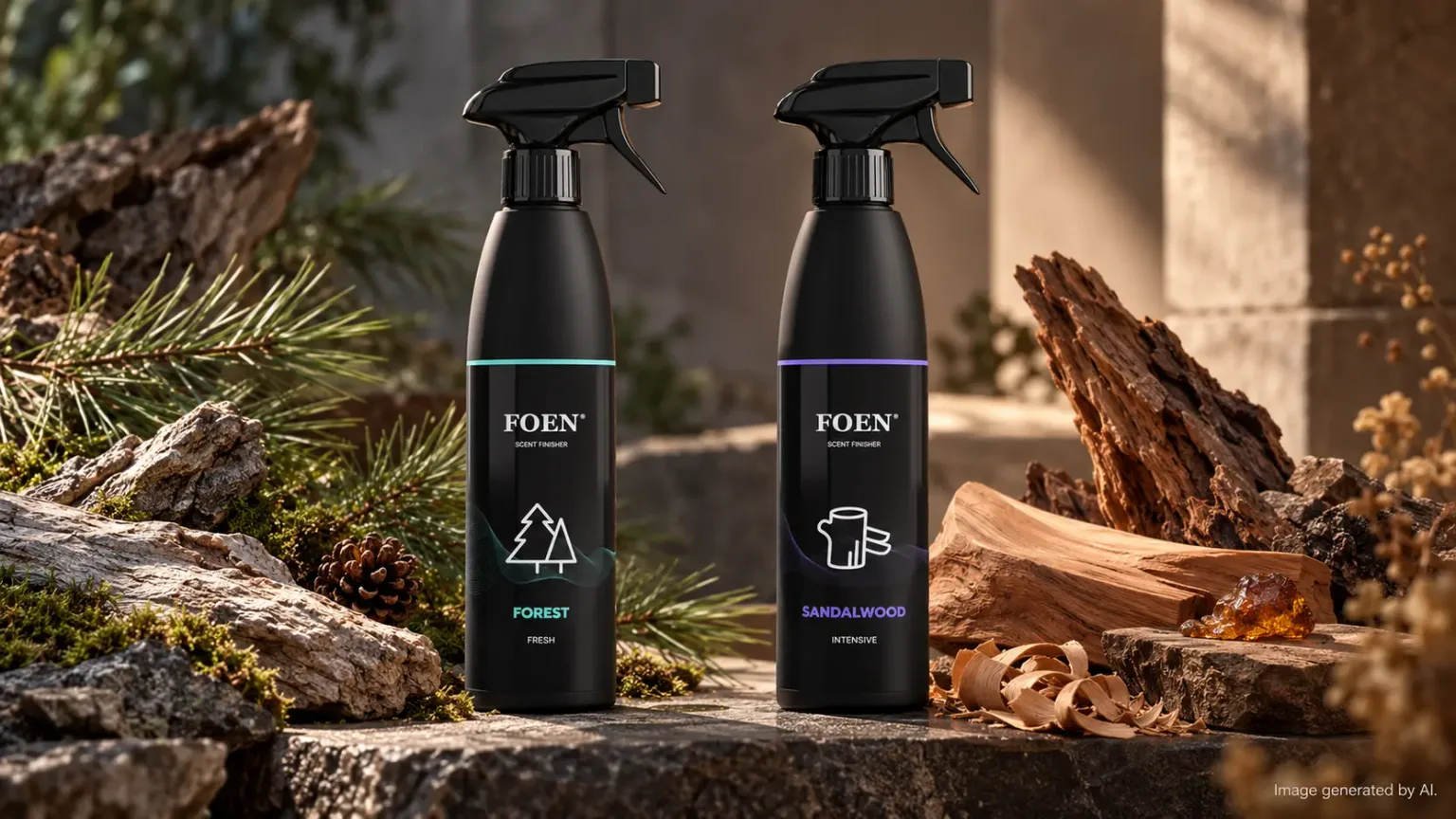
FOEN Perfumy Foen also comes in four scent families you can use to match what you liked during your trials: FRESH, SWEET, UNIQUE, and INTENSIVE. Your sample-testing notes should point you to one family rather than forcing you into a universal “best scent.”
FOEN TestBox: a verified example of a sampling option
If you want a practical way to trial multiple compositions before committing to a full-size bottle, the FOEN TestBox is an example of a verified sampling option built for exactly this decision point.
FOEN TestBox includes 10 testers so you can compare different scent directions in your own cabin. You can indicate preferences for the compositions you want, and if you do not specify a selection, the testers are chosen randomly, which can help you discover scents you might not have picked based on description alone.
Practical insight: Even with a sampling set, resist the temptation to “speed-run” by applying everything quickly. The goal is to learn how each tester behaves - especially the shift from early impression to how it feels during normal driving.
When used with the testing workflow above, a sampling set like FOEN TestBox helps you decide based on real in-car performance, not just how a scent reads in a box or on a hand.
Alternatives to spray routines
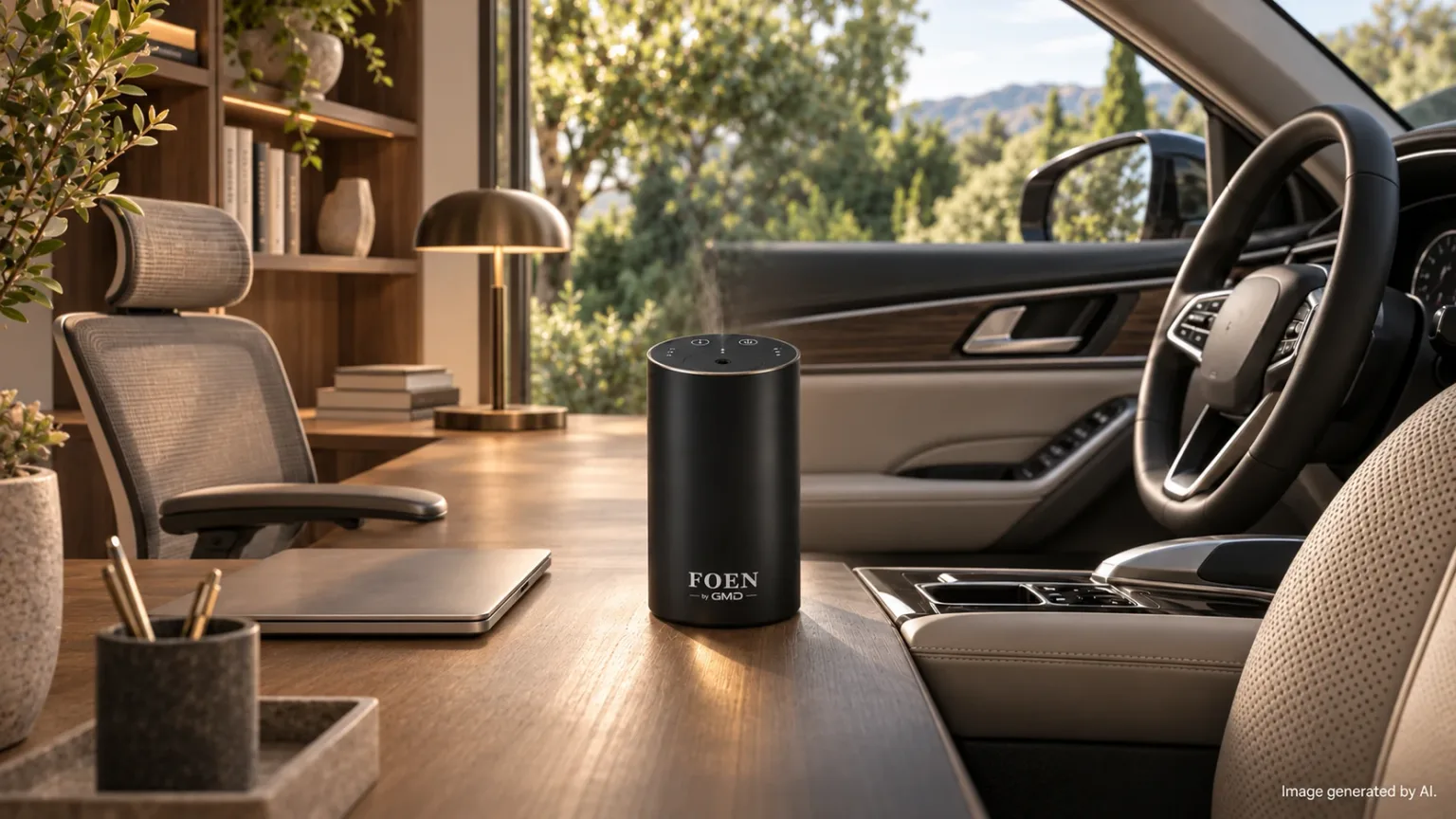
Spray routines are not the only way to build a great cabin scent experience. If you prefer a more visual, low-effort format, FOEN offers vent diffuser options that release fragrance gradually through airflow.
Foen Wood Stick
- Mounts into the ventilation system with a natural wood design.
- Releases fragrance progressively, especially when the vent is active.
- Designed as an aesthetic alternative to hanging products.
Foen Pulse
- Budget-friendly vent clip option with a minimalist form.
- Also releases through ventilation airflow.
- Useful if you want convenience without a mirror-hanging style.
The discovery process still matters. Whether you end up with sprays or a vent option, your final choice should be based on your cabin impressions.
Pick your signature scent - then lock it in
Blind-buying is frustrating because your cabin changes how fragrance evolves. The better plan is to trial scents with a car fragrance sample set, test them separately, avoid interference, and judge both the immediate impression and the experience during normal driving.
Once you choose the one that passes your comfort checklist, you can extend the experience with the right application method - such as FOEN Perfumy Foen’s 7 x 7 approach on fabric floor mats.
Next step: Explore sampling options and compare multiple compositions with FOEN car fragrances.
FAQ
What is a good scent for a car?
A good car fragrance is one you still enjoy after you have been inside for a short while and during normal driving. The “best” choice is personal - match what feels comfortable in your cabin, not just what smells good at first.
What is the best smelling car fragrance?
There is no single universal winner. The fragrance that wins is the one that aligns with your preferences and materials in your car. Testing with a sample set gives you evidence from your own environment.
How long do car air fresheners actually last?
Longevity depends on the product and how you apply it. A structured interior method like the 7 x 7 technique on fabric floor mats is designed to maintain a noticeable scent presence for about 30 days, and the overall use can extend as you finish the bottle gradually.
Can I spray car fragrance on leather seats?
Use the product as instructed. Many automotive fragrance applications focus on textiles like fabric floor mats and other specified surfaces. If a surface is not listed in the instructions, follow the recommended approach instead of improvising.
How can I make my car perfume last longer?
Focus on the right surface (as specified by the product instructions) and follow a consistent application routine. Also remember that strong early application can lead to fatigue, so accuracy beats overdoing it.