Scent Branding for Small Businesses: How to Choose a Signature Fragrance

If you run a salon, boutique or small hotel, you already manage details that customers feel immediately - how the space looks, how you greet them, and how smoothly the day runs. Scent branding is the next detail. It helps customers form an emotional impression before you ever say a word.
The good news: you do not need installed commercial aroma diffuser systems to get a premium result. With FOEN, you can build a consistent fragrance presence using a simple, textile-first spray workflow and then carry the same atmosphere into vehicles and fleets.
Let’s turn scent into a deliberate part of your customer experience - not a random “air freshener” moment.
What is scent branding and why small businesses benefit
Scent branding (also called olfactory branding) means using fragrance intentionally across the touchpoints where customers are present - reception, waiting areas, retail floors, and even in the moments between appointments.
For small businesses, scent works because you can be consistent quickly. You can design your “signature atmosphere” in days, not months. And because scent is sensed instantly, it influences how people feel while they wait, browse, or decide.
One common mistake is relying on random air freshening. It may change the smell briefly, but it rarely feels connected to the brand because it fades unpredictably and is not applied with a repeatable routine.
Quick distinction: commercial aroma diffusers (especially installed systems) can be useful in some environments, but many UK small businesses only need a controlled approach that’s detectable to customers, yet comfortable in smaller rooms.
| Approach | What customers notice | Best fit for small businesses | FOEN-friendly alternative |
|---|---|---|---|
| Installed HVAC-style diffusers | Often subtle and distributed, sometimes hard to control | Only when budget and building layout make sense | Textile-first spray application in priority zones |
| Spraying into the air | Short-lived “burst” of smell | Usually not ideal for consistent branding | Spray textile surfaces using a repeatable routine |
| Textile and surface scenting | Stable, presence-based fragrance while customers are in the space | Excellent - measurable, manageable, and brand-like | FOEN Interior & Car Perfume Sprays (7x7 technique) |
Match fragrance to your brand (with real scent families)
Think of scent like your brand’s “personality in liquid form.” If your brand feels crisp, modern and minimal, you probably do not want a heavy, dessert-like profile. If your brand feels warm and welcoming, a very sharp, “medical clean” profile may feel out of character.
Instead of asking, “Which fragrance do I personally like?”, build a quick scent brief that your staff can follow.
1) Write a simple scent brief (use these prompts)
- Desired associations: e.g., calm, polished, cosy, energised, refreshed, elegant.
- Typical visitors: e.g., families, professionals, couples, business travellers, local commuters.
- Existing smells: list what’s already in the premises (cleaning products, hair products, food notes, upholstery odours, laundry detergents).
- Acceptable intensity: comfortable and noticeable on arrival, not overpowering after 10 minutes.
Practical insight: intensity is part of the brief. If staff are unsure, you will hear conflicting feedback like “it’s too strong” and “I can’t smell it” in the same day. Use your brief to agree on one target: present, not loud.
2) Use scent-family language to guide testing (without forcing everyone to interpret the same)
Words like “minimal”, “warm” or “refined” are helpful because they describe the overall direction - not an exact molecule-level match. Still, people do interpret scents differently, so testing should happen in your space with your visitors.
Start with one family, test it, and then adjust. Here are scent-family cues you can translate into real expectations:
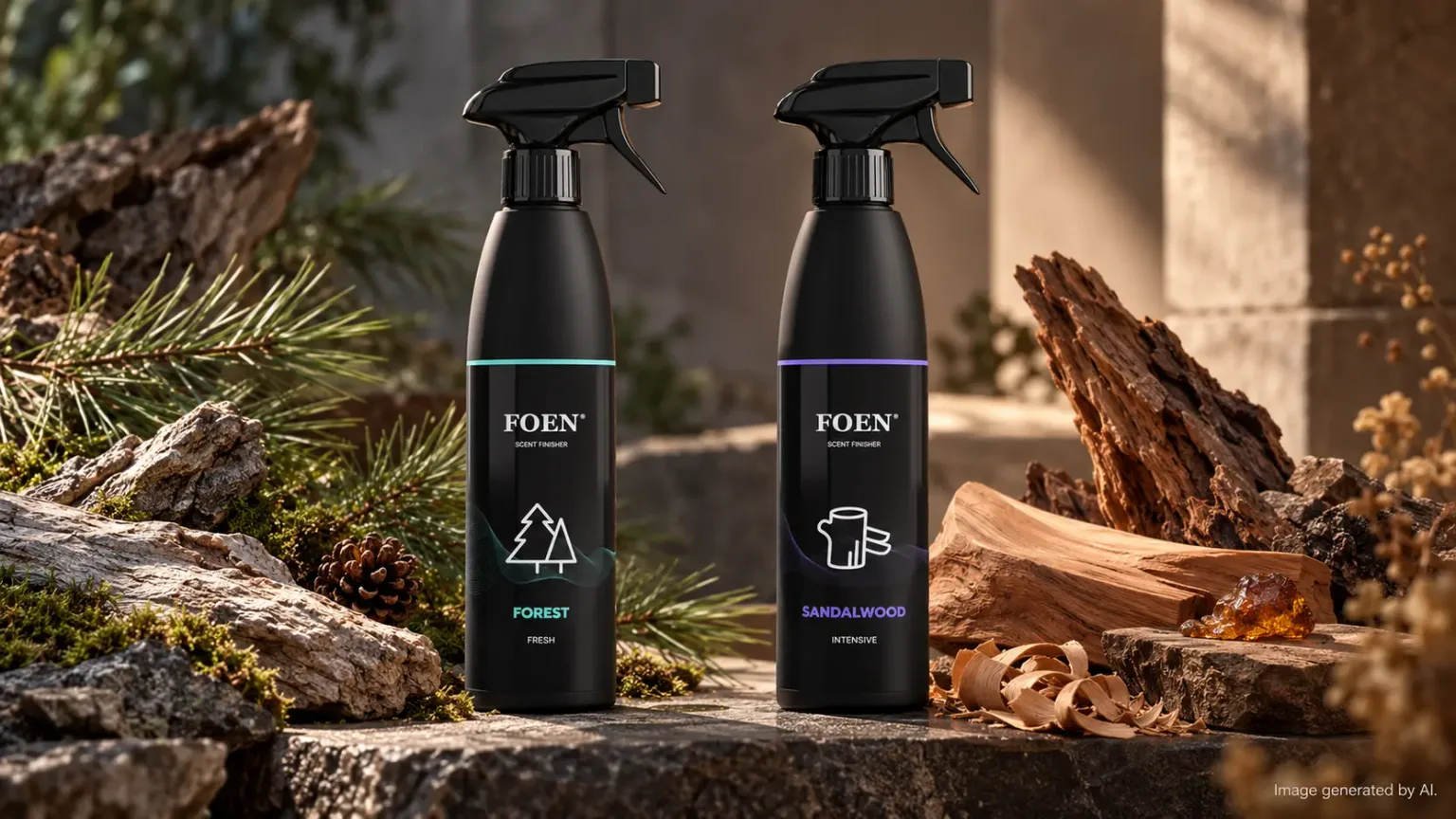
- FRESH - clean, crisp, and clarifying. Expect sensations like cool air, light botanicals, or a freshly cut forest mood (example families: Aqua, Forest, Green Tea, Soul).
- SWEET - warm, inviting, and softly enveloping. Think of cosy sweetness and comforting glow (example families: Adventure, Buble Gum, Flower, Glamour, Savor, Vanilla).
- UNIQUE - deeper, more distinctive character with a less generic feel (example families: Black, Carbon, Her & His, Laguna, Mr. Boss).
- INTENSIVE - richer presence, often more noticeable and longer lasting in character (example families: Gentleman, Sandalwood, Jack, New Car Leather, No smoking, Habib).
3) Match the scent to the moments in your journey
Do customers spend time waiting? Do they sit close to upholstery? Do they come in smelling like the outdoors? Your scent should support the emotional job of each moment - arrival, wait, treatment, checkout.
Practical insight: if your reception area is small, choose an intensity level you can “build” slowly. In compact spaces, one too-strong day can create discomfort that customers remember.
The FOEN 7x7 technique: premium scenting without HVAC
The core idea behind scenting for brand consistency is simple: build a stable fragrance presence on textiles and interior surfaces - not just in the air.
FOEN Interior & Car Perfume Sprays are designed for a textile-first workflow. The practical method is the 7x7 technique:
- Days 1-7: apply 7 sprays in one place, once per day, for 7 consecutive days.
- Result: the scent can stay noticeably present for around 30 days.
- Longer-term: as you use the remaining bottle gradually, the overall effect can extend up to around four months, depending on how you apply it.
That turns scenting into a routine you can repeat - and repeatability is what makes scent feel branded instead of accidental.
Where to apply in a shop, salon, or small venue
Pick one “key zone” where customers notice the environment as soon as they enter:
- Waiting room: upholstery or chair fabric
- Entrance area: mats, doormats or carpets
- Curtains and soft furnishings: near reception where they’re not constantly washed
- Textile decor that stays in place: items you can scent without constant movement
Practical insight: choose textiles that you can realistically keep in the same condition. If you rewash or deep-clean multiple zones daily, your scent brief will never “settle,” and testing will be confusing.
Choose the right FOEN spray size for your routine
FOEN sprays come in two bottle sizes: 185 ml (Small) and 450 ml (Large). Use the smaller option to start with one priority zone. Choose the larger option when you plan to maintain multiple textile areas over time without frequent reordering.
Author tip in practice: start small. Staff training, customer feedback, and consistent application matter more than covering every corner on day one.
Extend the experience to cars and fleets
Many customer journeys include transportation. If your space smells premium but your vehicles smell neutral (or inconsistent), the brand atmosphere can feel disconnected.
FOEN offers car-scent options designed for different budgets and vehicle use styles.
Wood Stick (premium, long-lasting)
Foen Wood Stick uses natural wood with a premium polymer component and releases fragrance gradually, especially when air flow is used. It is positioned as a more refined, design-led choice and lasts up to 8 weeks, with refills available.
Scents: Squeeze, Desert, Sunrise.
Pulse (simple, budget-friendly)
Foen Pulse is designed for practical consistency in modern car interiors. It fits into a ventilation grille and releases fragrance evenly through air flow. It is positioned as a more accessible option compared with natural wood.
Scents: Amor, Aura, Noir, Rise.
Practical insight: match the car scent to the mood you chose for your venue. For example, if your in-premises vibe is crisp and clean (FRESH), consider whether “clean and energetic” fits the ride experience too - and keep intensity comfortable.
Consistency without overdoing it
Scent is powerful, which means consistency matters more than pushing intensity. Over-scenting can feel cheap or uncomfortable, especially in smaller rooms.
Use these rules to keep it controlled:
- Start with one key zone (waiting area, reception, entrance) and build from there.
- Follow a repeatable routine like the 7x7 technique so staff know what “good” looks like.
- Pick a scent family that fits your brand personality, not only what you personally enjoy.
- Scale thoughtfully once customers and staff confirm the atmosphere feels right.
Also, avoid “spray randomness.” If scent is applied whenever someone remembers, customers experience it as clutter - not branding.
A repeatable staff routine (simple and realistic)
- Day 1-7 application: 7 sprays in one defined textile zone, once per day.
- After day 7: keep monitoring comfort and presence (do not switch scents mid-test unless it’s clearly wrong).
- Feedback capture: ask staff for short notes like “arrivals reacted well,” “we felt it was too strong,” or “we could not smell it at all.”
Once you’ve proven your “signature direction,” extending it becomes much easier - in your space first, then in vehicles.
FAQ
How long does ambient scent last on textiles with the 7x7 technique?
With the 7x7 method (7 sprays daily for 7 days), the scent can remain noticeably present for around 30 days, with longer overall effect depending on continued, gradual use.
Do I need HVAC-style commercial aroma diffusers in the UK to do scent branding?
No. Many small businesses achieve a brand-like result by scenting textiles and key touchpoints with a controlled routine rather than relying on installed diffuser systems.
Can I use different scents in different rooms?
Yes, but test one scent first and keep it consistent for a clear comparison. If you use multiple scents, ensure each area supports a distinct brand mood and staff can apply it reliably. Ready to choose your scent routine? Use the FOEN approach as your practical starting point and apply your signature fragrance in priority zones first - then extend it to vehicles if your business needs it. Explore FOEN’s products and scent lines here: FOEN interior and car fragrance products.